Cost and ROI
What is a branded wall worth? An honest look at the research on wall graphics ROI.
No study we found measures wall murals and sales directly. Here's the adjacent evidence with every caveat, plus a simple way to judge value for your own space.
Start here
The honest gap
We looked for a primary or peer-reviewed study linking wall murals or wall wraps to brand recall, retention or sales, and didn't find one. What exists is adjacent: research on signage and on enriched versus bare workspaces. It's below, with sources and limits.
What the research actually says
Five studies, what each found, who was asked, and why it only goes so far.
| Study | What it found | Sample | Caveat |
|---|---|---|---|
| FedEx Office 'What's Your Sign?' survey (2012) | 76% said they had entered a store they'd never visited because of its signs. 68% said a store's signs reflect the quality of its products or services. | Phone survey of 1,000 U.S. adults (914 in the final sample); margin of error +/-3.1% | Commissioned by a print and signage vendor; self-reported; about signs, not interior murals. Most relevant to storefront and window graphics. |
| Knight and Haslam, University of Exeter (2010), described by Tim Harford | People who chose their own office decor got about 30% more done than in a bare office, and about 15% more than in an office decorated for them. | One experiment, four office layouts; sample size not stated in the summary | Secondary summary; the journal citation wasn't confirmed. The gain came from giving people a say. It doesn't show that any branded wall raises output. |
| Nieuwenhuis, Knight, Postmes and Haslam (2014), Journal of Experimental Psychology: Applied | Adding plants to a previously bare office raised productivity by 15% in one study. | Three field experiments; the 15% figure comes from a study with 33 participants | About plants, not wall graphics. Small sample. Supports enriched over bare spaces only. |
| Human Spaces report (2015), Interface with psychologist Cary Cooper | Workers in spaces with natural elements reported 15% higher well-being, 6% higher productivity and 15% higher creativity. | 7,600 office workers in 16 countries, self-reported | Sponsored by a flooring maker; about natural elements. Relevant only to nature-themed murals. |
| Gensler 2013 U.S. Workplace Survey | About one in four U.S. workers said they could work effectively in their workplace. Workers who could focus were 31% more satisfied and 14% higher performing. | More than 2,000 U.S. knowledge workers | Design-firm survey; says nothing about wall graphics, and doesn't say whether figures are relative or percentage points. Context only. |
Some statistics that circulate in sign-industry marketing couldn't be traced to a primary source. We left them off this page.
Sources:
- Printing Impressions: FedEx Office 'What's Your Sign?' survey (May 14, 2012)
- TED Ideas, Tim Harford: Why every office should scrap its clean-desk policy (Knight and Haslam, University of Exeter)
- Nieuwenhuis, Knight, Postmes and Haslam (2014), Journal of Experimental Psychology: Applied 20(3): 199-214
- Workplace Insight: Human Spaces report (Interface with Cary Cooper, Apr 2, 2015)
- FMLink: Gensler 2013 U.S. Workplace Survey
Match the evidence to the wall
Use the study that fits your space
Each piece of research supports one kind of wall. Don't stretch it further.
 Signage
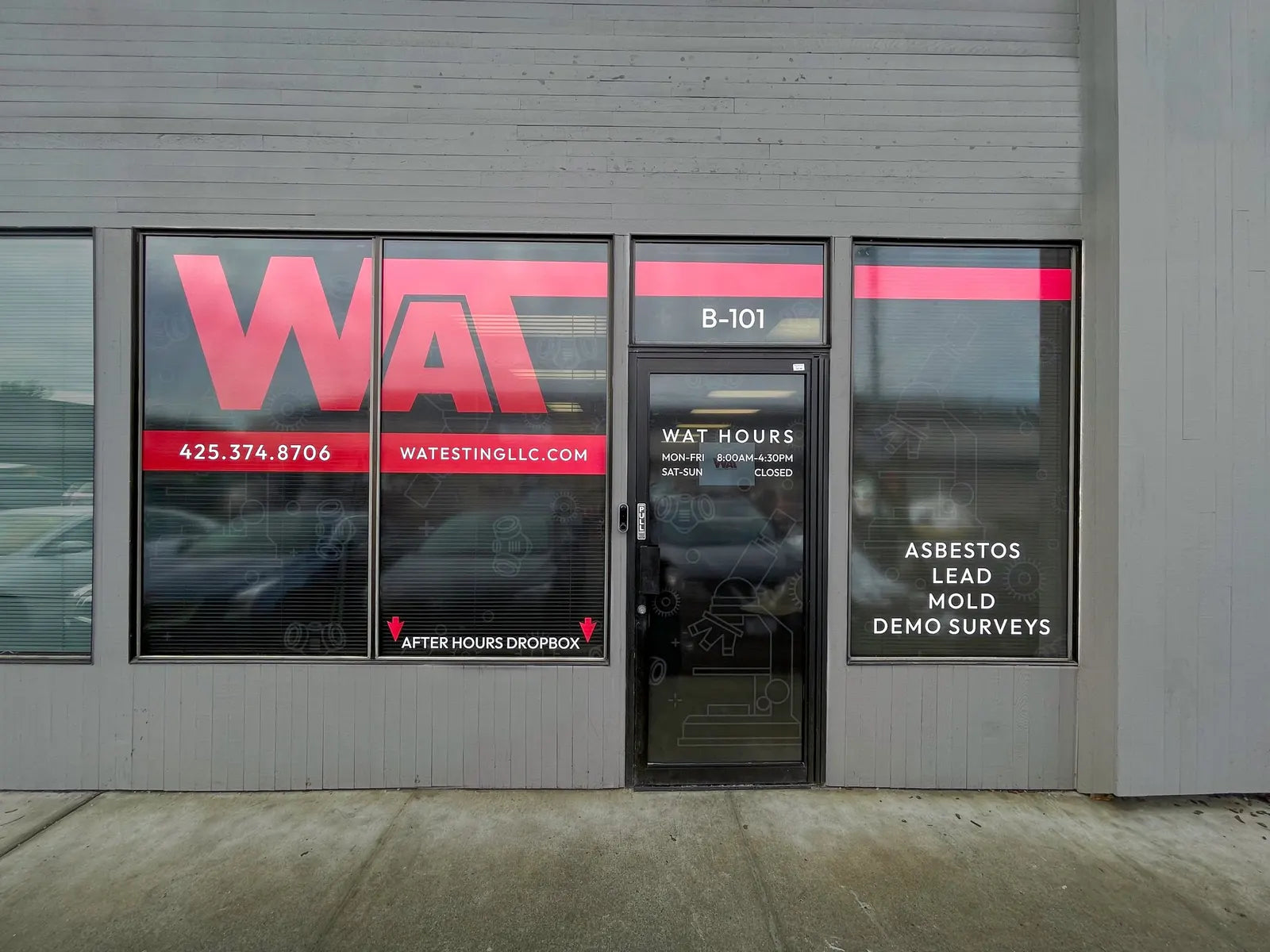
Storefronts and windows
Signs bring people in
The 2012 FedEx Office survey is about signs, so it fits window graphics and storefront glass best. Treat it as self-reported shopper opinion.
 Workplace
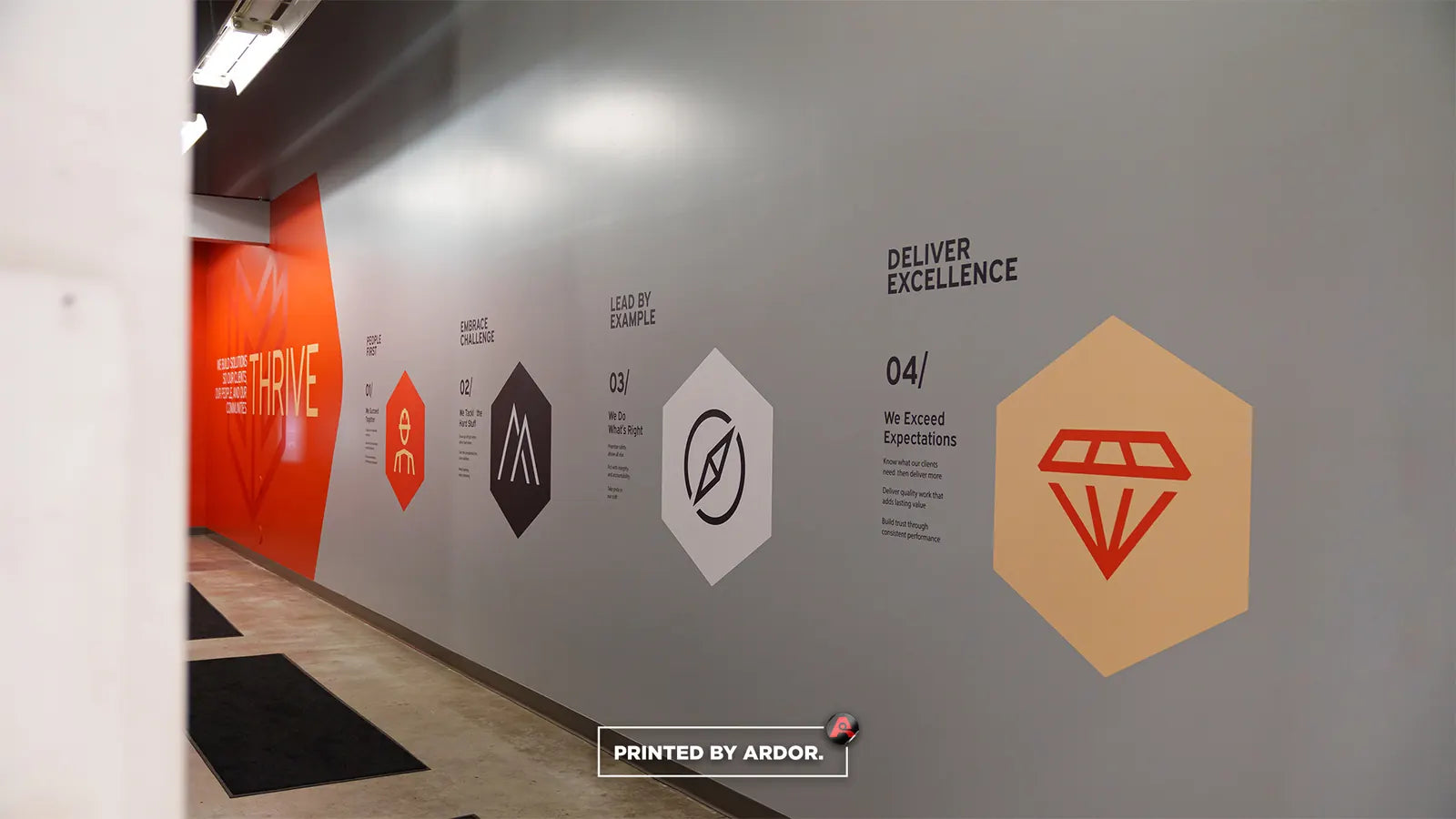
Offices
Give your team a say
The Exeter work found the biggest gains when people chose the decor. Proof two or three directions and let the team vote.
 Biophilic
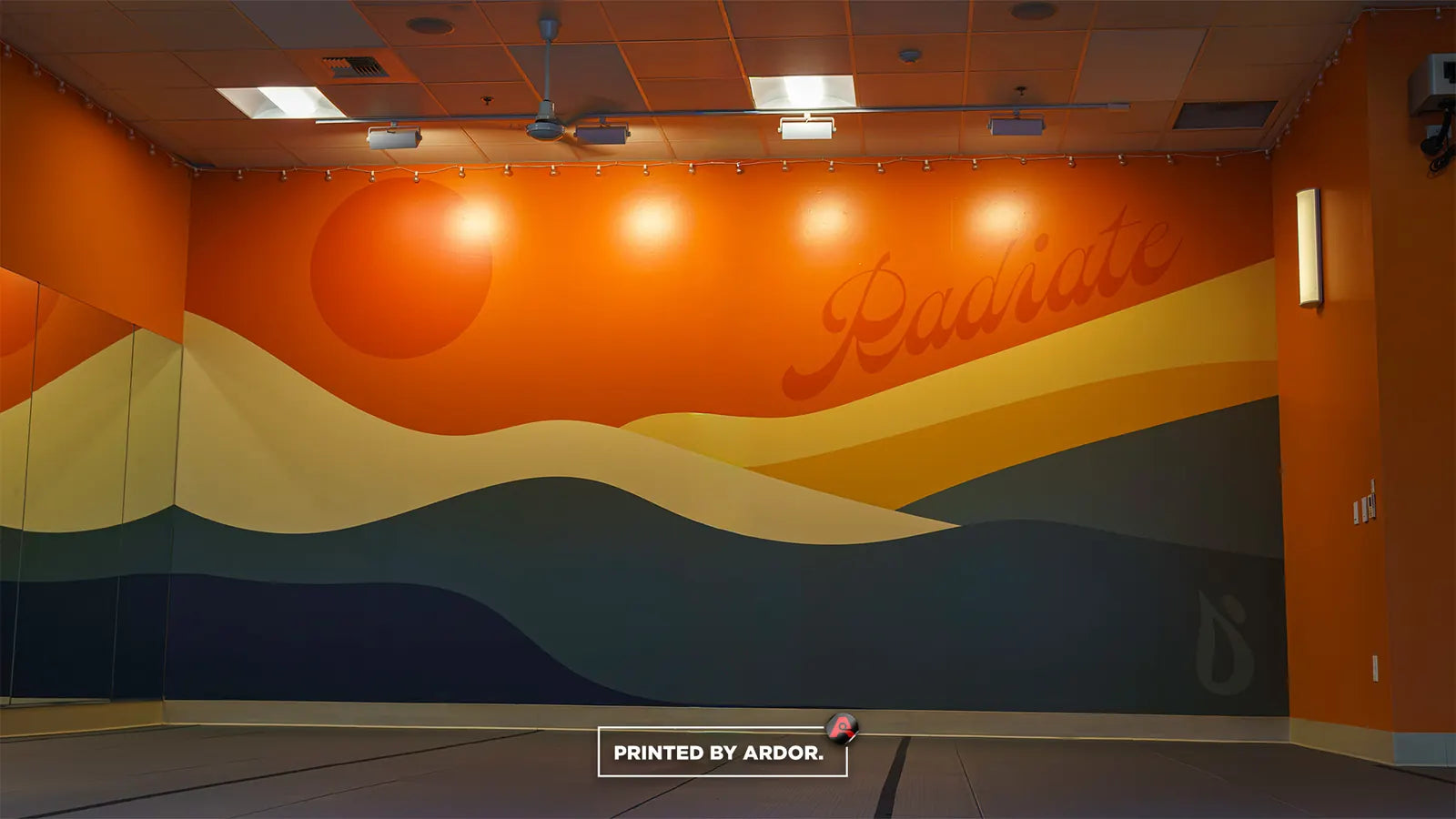
Nature murals
Bring the outdoors in
The Human Spaces and plant studies are about natural elements. They're a fair argument for a forest, mountain or water mural, and nothing more.
A simple frame
How to think about ROI for a wall
Treat a wall graphic like any fixture. Spread its cost over the days it works for you, then compare that with what it replaces.
- Cost per day on the wall: [project cost] divided by ([years on the wall] x 365).
- Cost per employee per year: [project cost] divided by [years], divided by [employees who use the space].
- Cost per view: [project cost] divided by ([years] x [days open per year] x [people who see it per day]).
- What it replaces: repainting cycles, framed art, temporary banners or a second sign.
- What you can track (rule of thumb): people who mention the wall when they call, photos tagged at your location, and a short before-and-after staff survey.
ROI lens
ROI lens calculator
Enter a project cost (your quote, or a number you're testing) and how long the wall will stay up. The calculator spreads the cost across days, people and views.
Illustration only. It uses the numbers you enter and does not predict sales, recall or productivity.
How it works
Cost per day = project cost divided by (years x 365). Cost per view also divides by days open per year and people per day. The years options come from manufacturer ratings and Ardor's own guide; none of them is a warranty.
More calculators
Run the other numbers
- Cost over time
Wrap vs paint vs wallpaper
Total and per-year cost over the years you'll keep the space.
FAQ
Frequently asked questions
Do wall graphics increase productivity?
No study we found tests wall graphics directly. Research on enriched versus bare offices points the right way, and the strongest result came when employees chose the decor. Treat any productivity claim for wall graphics with care.
Do wall graphics increase sales?
We found no primary study linking interior murals to sales. A 2012 FedEx Office survey found most shoppers say signs draw them into new stores, which supports storefront and window graphics, with the caveat that it's self-reported.
How many years should I assume for ROI math?
It depends on the film. Avery rates its MPI 2610 and 2611 wall films for up to 3 years printed indoors, and 3M gives its IJ8624 textured-wall film 2 years. Ardor's wall guide says indoor wraps often last five or more. Use the shorter figure if you want to be conservative.
How do I measure whether a wall is working?
Ask callers and visitors how they heard of you, watch for photos tagged at your location, and run a short staff survey before and after the install. None is perfect; together they tell a story (rule of thumb).
Is a nature mural better than a brand wall?
For well-being, the Human Spaces survey links natural elements to higher self-reported scores, but it was sponsored by a flooring maker and isn't about murals specifically. For brand recognition, a logo wall does the job a landscape can't. Many offices do both.
Why don't you quote bigger numbers like other sites?
Because we couldn't trace them to a primary source. Every number on this page links to where it came from, along with its limits.
Sources
- [1] Printing Impressions: FedEx Office 'What's Your Sign?' survey (May 14, 2012) (opens in a new tab)
- [2] TED Ideas, Tim Harford: Why every office should scrap its clean-desk policy (Knight and Haslam, University of Exeter) (opens in a new tab)
- [3] Nieuwenhuis, Knight, Postmes and Haslam (2014), Journal of Experimental Psychology: Applied 20(3): 199-214 (opens in a new tab)
- [4] Workplace Insight: Human Spaces report (Interface with Cary Cooper, Apr 2, 2015) (opens in a new tab)
- [5] FMLink: Gensler 2013 U.S. Workplace Survey (opens in a new tab)
- [6] Avery Dennison MPI 2600 Series Wall Film data sheet (Rev. 17) (opens in a new tab)
- [7] 3M Scotchcal IJ8624 product bulletin (Rev. E, Sept 2017) (opens in a new tab)
- [8] Ardor Printing: Seattle wall wraps and coverings guide (Dayne Remlinger, updated Oct 2, 2026) (opens in a new tab)
Free on-site estimates · Ardor Printing
Putarealnumberinthe calculator
A free on-site measure gives you an actual project cost. Call (425) 629-0796 or request your estimate online.