Module 02 · Wall surfaces
The wall picks the film.
Film sticks to paint. Paint sticks to the wall. If either bond is weak, the graphic fails. Here is how drywall, textured walls, brick, block, concrete, glass, metal and wood each behave, and how to prep them.
Why the surface matters
Two bonds hold every wall graphic
A wall wrap is only as strong as its weakest bond. The adhesive grips the paint, and the paint grips the wall. Manufacturers agree on the rule that follows: test every wall, because paints differ even inside one building.
Ardor installs on smooth or lightly textured painted drywall, finished concrete, glass, metal and wood, and uses textured films for block, stucco and brick. Freshly painted walls must cure first.
The cards below sort common surfaces by how they behave. Specs come from 3M, Avery Dennison and Mactac install bulletins. Guidance on orange peel and knockdown textures is an industry rule of thumb, because the manufacturer documents do not name those textures.
Surface by surface
What works on each wall
Each chip is a quick verdict: Ideal, Test first, Prep needed, Specialty film or Avoid.
- Ideal
Drywall
Painted drywall, smooth
The best surface for wall film when the paint is primed, fully cured semi-gloss or gloss. Avery recommends calendered film here. Clean it, test it and apply dry.
- Test first
Paint
Low-VOC or zero-VOC paint
3M says film is less likely to adhere to low-VOC paints, and formulas vary by brand. If the strip test comes in low, 3M's fix is an alcohol wipe and retest, then its enhanced cleaning method, then a higher-tack film.
- Prep needed
Paint
Flat, matte, satin or scrubbable paint
Avery and Mactac warn against flat, matte and satin finishes and against paints with silicone, Teflon or wax additives that migrate into adhesive. A primer, or a companion semi-gloss topcoat, is the usual fix (the topcoat is an industry rule of thumb).
- Specialty film
Texture
Light orange peel
Rule of thumb: light orange peel is about the limit for cast film worked in with heat and a rivet brush. 3M notes that textures rougher than 150-grit sandpaper are hard for adhesive to reach.
- Prep needed
Texture
Knockdown, skip-trowel or heavy texture
Rule of thumb: heavy knockdown and skip-trowel walls usually need a skim coat or sanding first, or a pasted wallcovering or painted mural instead. Avery says film on heavy texture bonds only to the high spots.
- Specialty film
Masonry
Brick
3M IJ8624 film with 8524 laminate, applied with heat and a TSA-4 applicator. Mortar joints deeper than 1/8 inch need 3M's Mosaic Graphic Technique, which splits the art to fit. Dusty or efflorescent brick must be cleaned or sealed.
- Specialty film
Masonry
Concrete block (CMU)
3M lists IJ8624 for concrete block, and Avery calls for cast film with a heat gun and rivet brush. Painted block needs fully cured paint. Dusty, crumbly block will not hold adhesive until it is sealed.
- Test first
Masonry
Poured concrete
3M says new concrete must cure 6 to 12 months or be sealed. Sealed or painted concrete follows the sealer maker's instructions, then cleaning and a strip test. Moisture moving through the concrete is the main risk.
 Ideal
IdealGlass
Glass
Glass takes film well once you know about any coating. 3M's check: drop water on a few spots, and if it beads, scrub until it stops beading. Window films go on wet. 3M also flags thermal stress on glass in strong sun.
- Test first
Metal
Metal
Etched, degreased or anodized aluminum and stainless take film after cleaning. Bare carbon steel needs corrosion removed and paint first. 3M advises against brass, copper, lead, magnesium and tin. Avery says removal from chalky or oxidized metal is not guaranteed.
 Prep needed
Wood
Wood
3M's sequence: strip test, clean, fill and sand with 180 to 220 grit, then two coats of an approved primer or sealer on raw wood, with Tape Primer 94 on edges and corners.
- Avoid
Avoid
Existing wallpaper or EIFS
Avery advises against applying over wallpaper. 3M allows it only when every seam and edge adheres and the test passes, since the paper can lift with the film later. 3M strongly advises against EIFS and offers no warranty there.
Surface quick reference
One line per surface. Basis tells you whether the guidance comes from a manufacturer or from installer experience.
| Surface | Works? | Film approach | Key prep | Basis |
|---|---|---|---|---|
| Smooth painted drywall | Yes | Calendered wall film, dry applied | Cured semi-gloss or gloss paint; clean; strip test | Manufacturer (Avery, 3M) |
| Low-VOC or zero-VOC paint | Test first | Standard film if the test passes; higher-tack film if not | 70% IPA / 30% water wipe, then retest | Manufacturer (3M) |
| Flat, matte, satin or scrubbable paint | Prep first | Film after a primer or semi-gloss topcoat | Companion primer and paint from one maker | Manufacturer (Avery, Mactac, 3M); topcoat fix is rule of thumb |
| Light orange peel | Usually | Cast film with heat and a rivet brush | Strip test; heat during install | Manufacturer method; texture label is rule of thumb |
| Heavy knockdown or skip-trowel | Rarely as-is | Skim coat or sand first, or use wallcovering or a mural | Skim, prime and repaint | Rule of thumb; Avery on sanding smooth |
| Brick | Yes, specialty film | 3M IJ8624 + 8524 with heat and a TSA-4 applicator | Clean; seal dusty brick; mosaic technique for deep joints | Manufacturer (3M) |
| Concrete block (CMU) | Yes, specialty film | IJ8624 or cast film with heat | Seal crumbly block; cured paint | Manufacturer (3M, Avery) |
| Poured concrete | With prep | Film over sealer or paint | Cure 6 to 12 months or seal | Manufacturer (3M) |
| Glass | Yes | Window film (wet) or graphics | Water-bead test for coatings | Manufacturer (3M) |
| Metal | Mostly | Film after cleaning; paint bare steel first | Degrease; skip brass, copper, lead, magnesium and tin | Manufacturer (3M, Avery) |
| Wood | With prep | Film over primer or sealer | Fill, sand 180 to 220 grit, two primer coats | Manufacturer (3M) |
| Wallpaper or EIFS | Avoid | Avery: avoid wallpaper; 3M: no warranty on EIFS | n/a | Manufacturer (Avery, 3M) |
Sources: 3M Instruction Bulletin, Application, Substrate Selection and Preparation; Avery Dennison Instructional Bulletins 1.6 and 6.50; Mactac Deco Media Application Guide; SignShop reporting on 3M wall preparation guidance.
Watch out
Low-VOC paint can block adhesion
Low-VOC and zero-VOC paints are good for indoor air, and 3M says film is less likely to adhere to them. 3M recommends avoiding them on interior wallboard where graphics will go, and trade press reports 3M describing the formulas as trade secrets, so results vary by brand. If you plan to repaint before a wrap, tell us the paint brand and sheen first so the test and the film can be planned around it.
Texture
Textured walls: what actually works
Texture changes the job because adhesive only grips what it touches. On a heavy texture, film bonds to the high spots and bridges the low ones (Avery).
For moderate texture, manufacturers use cast or purpose-built film plus heat. Avery calls for cast film, a heat gun and a 75 mm rivet brush to work the film into crevices. 3M's IJ8624 Graphic Film for Textured Surfaces is a 2 mil removable film designed for brick, cinder block and industrial stucco. It goes on with a heat gun and 3M's TSA-4 applicator, and 3M pairs it with 8524 luster laminate.
3M tests textured walls differently from smooth ones. A sample of IJ8624 with 8524 laminate is applied with heat at about 2 inches per second and left for one week. Then a corner is lifted and pulled diagonally at 180 degrees.
Orange peel and knockdown are not named in the manufacturer documents we use. Industry rule of thumb: light orange peel is the realistic limit for cast film and heat. Heavy knockdown or skip-trowel usually needs a skim coat or sanding, or a pasted wallcovering or painted mural instead. Avery notes that textured walls can be sanded smooth, primed and repainted.
Reading 3M's textured-wall test
After one week on the wall, the sample tells you which way to go.
| What you see | What it means |
|---|---|
| Some resistance, little or no paint pulled | Satisfactory: the wall can take the film |
| Film peels off easily | Do not use this film on this wall |
| Substantial paint or texture comes off | The paint is not cured or not bonded well enough |
| Film pops out of grout lines deeper than 1/8 in (3.2 mm) | Use 3M's Mosaic Graphic Technique |
Source: 3M Instruction Bulletin, Application, Substrate Selection and Preparation. 3M specifies a heat gun capable of 1,000°F for the test.
Surface prep, step by step
A prep checklist drawn from Avery, 3M and Mactac bulletins. Use it before any wall graphic, whoever installs it.
-
Step 1
Identify the surface and paint
Note what the wall is made of, the paint sheen, its age and the brand if you know it. Look for moisture, cracks and peeling.
Avery: repair holes, seams and peeling paint first
-
Step 2
Let the paint cure
Give the final coat at least 7 days. Mactac adds that water-based latex can need 30 to 90 days to fully cure, and dark colors longer. Drywall less than a year old can still shift, shrink and outgas (Mactac).
Minimum 7 days (Avery, Mactac)
-
Step 3
Seal or prime if needed
Raw wood, porous masonry, unsealed drywall and problem paints get a primer or sealer first. Use a companion primer and paint from one maker.
3M: GARDZ cures in 3 h, 24 h recommended; Bulls Eye 1-2-3, 7 days
-
Step 4
Run an adhesion test
3M: three 1 x 10 inch strips, a 15-minute dwell, a 180-degree pull, and an average checked against a minimum of 400 to 1,000 g by adhesive. Avery: a strip left 2 to 3 days. Textured walls: 3M's one-week, heat-applied test. Paint on the strip means stop.
Test every wall
-
Step 5
Clean on install day
Wipe with a lint-free cloth and use TSP on greasy areas. For 3M films, wipe twice with 70% isopropyl alcohol and 30% water and wait about 10 minutes. Avery asks that a washed wall dry at least 24 hours. Cleaning can change paint gloss, so mask off the area.
70/30 IPA wipe (3M)
-
Step 6
Acclimate the film
Let the printed film rest flat at room temperature for at least an hour before it goes up (Avery), and check the film's minimum application temperature.
Avery MPI 2600: 40°F min; ORAJET 3628: 50°F min
-
Step 7
Apply dry, with heat where texture calls for it
Wall films go on dry, without application fluid (Avery). On texture, heat and a rivet brush work the film into the surface.
Dry method only (Avery)
Projects
Walls Ardor has wrapped
Interior and exterior walls across King and Snohomish counties.
-
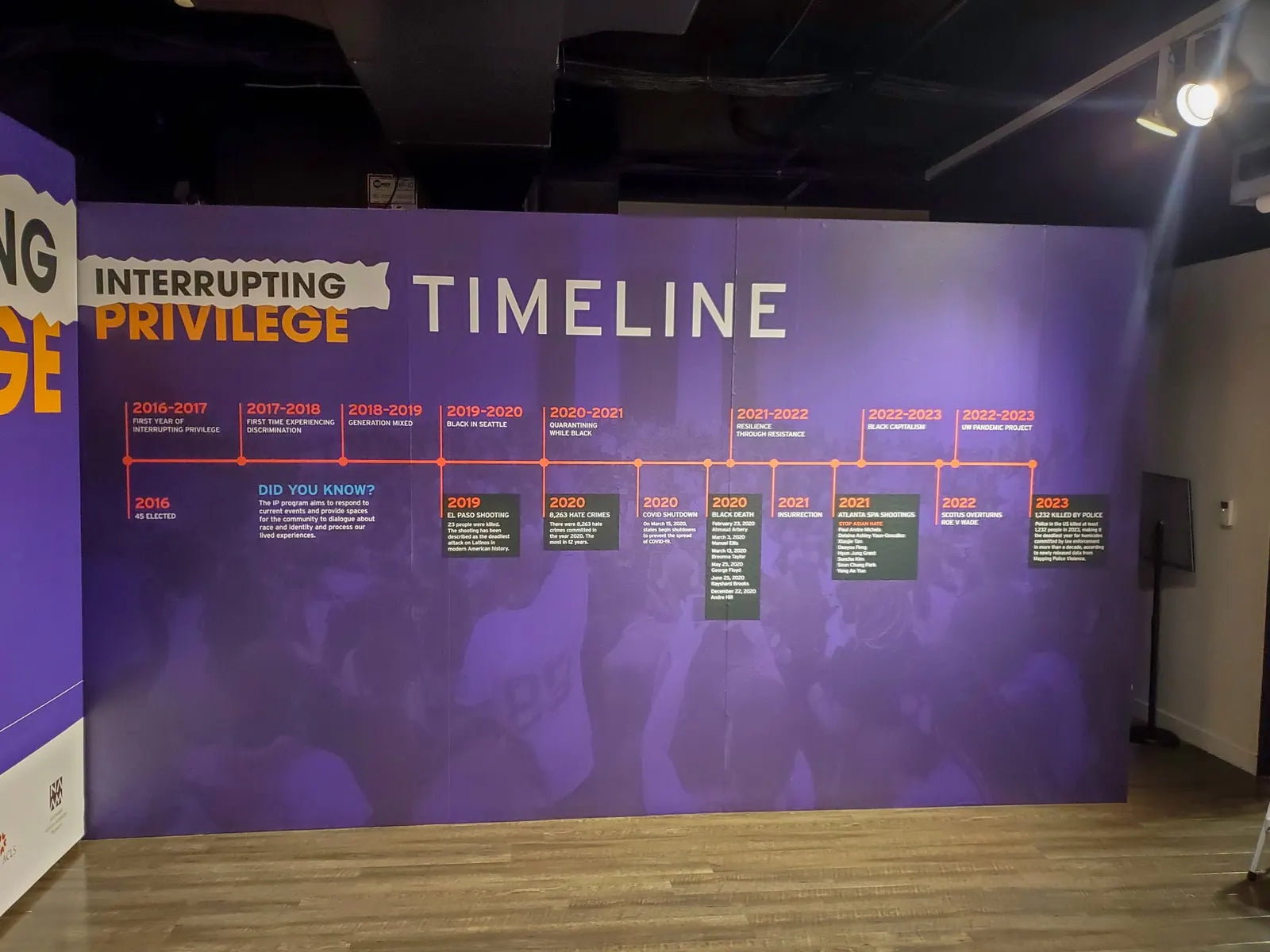
Exhibits & Museums Program Timeline Wall
A floor-to-ceiling purple wall wrap lays out the Interrupting Privilege program's milestones year by year. Timeline walls like this turn a hallway into a story people walk through.
-

Offices & Lobbies Seattle Skyline Office Mural
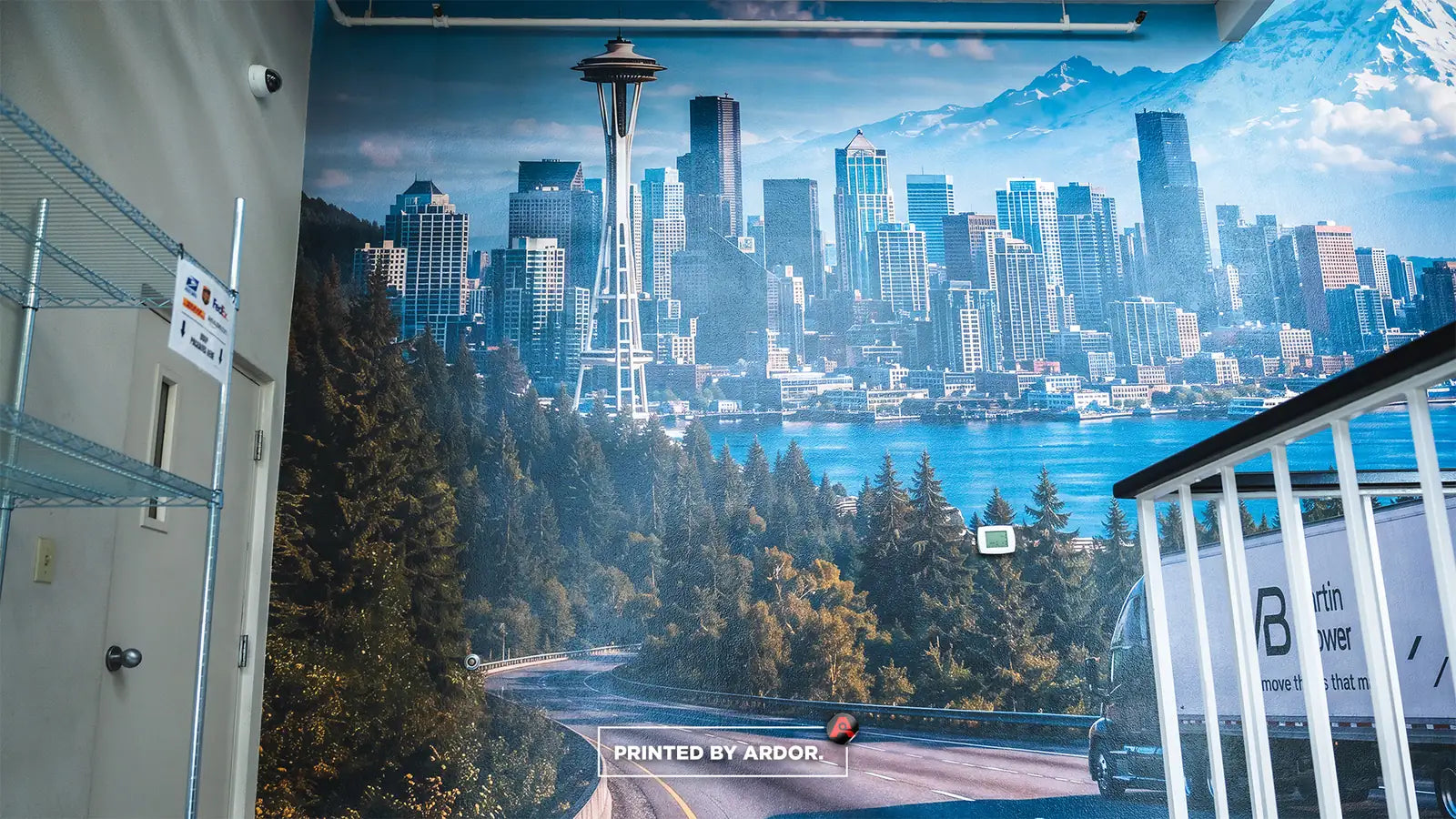
A Seattle skyline, the PureDry phoenix logo and a branded van wrap around four windows in one continuous office mural.
-
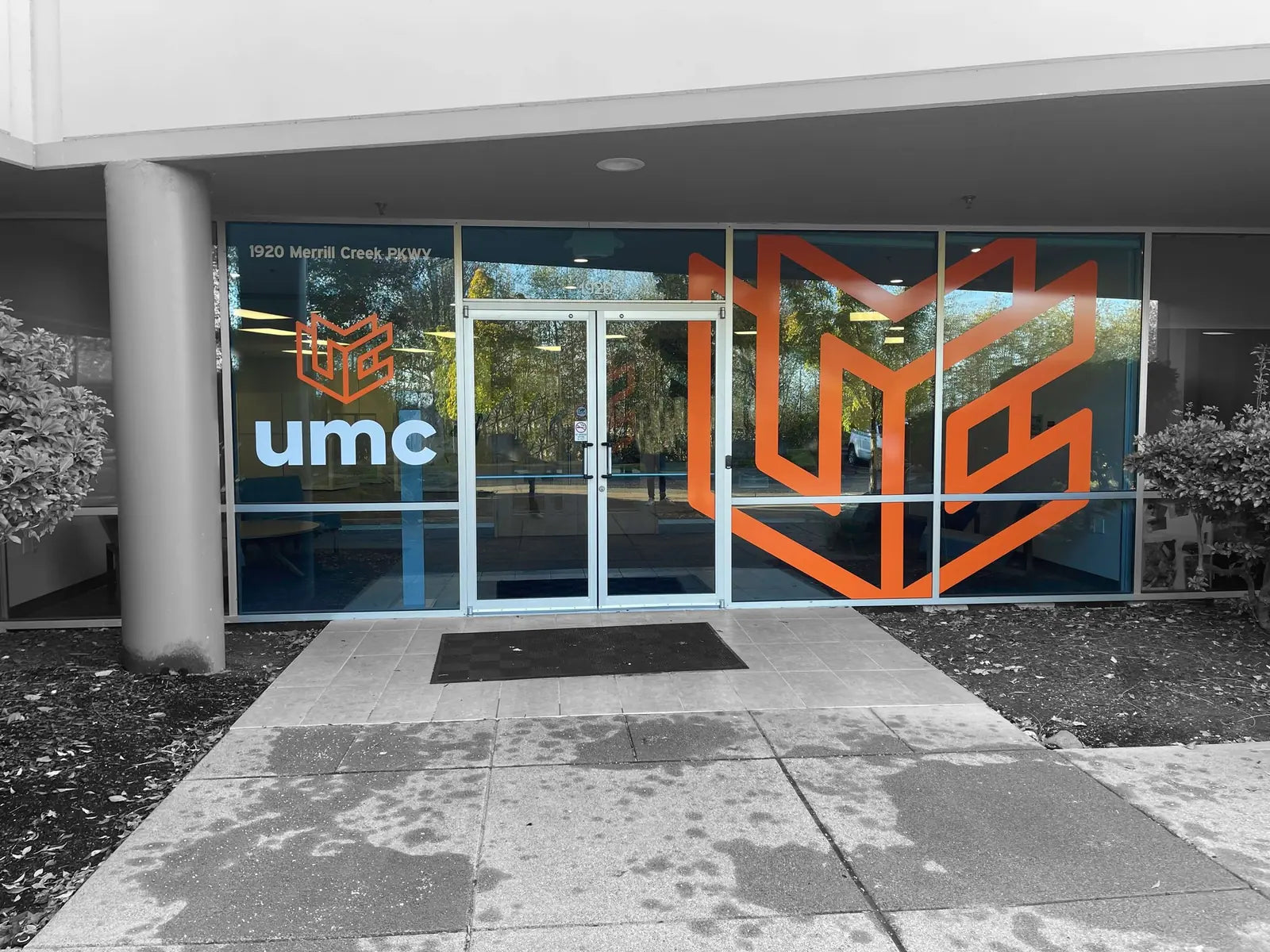
Windows & Storefronts Entrance Logo Window Graphics
A large orange UMC logo and white UMC lettering span the front glass of a commercial building entrance.
-

Other Full-Wall Stadium Fan Mural
A packed-stadium photo mural with the Alabama Crimson Tide logo runs edge to edge and wraps around a door in a finished room.
-
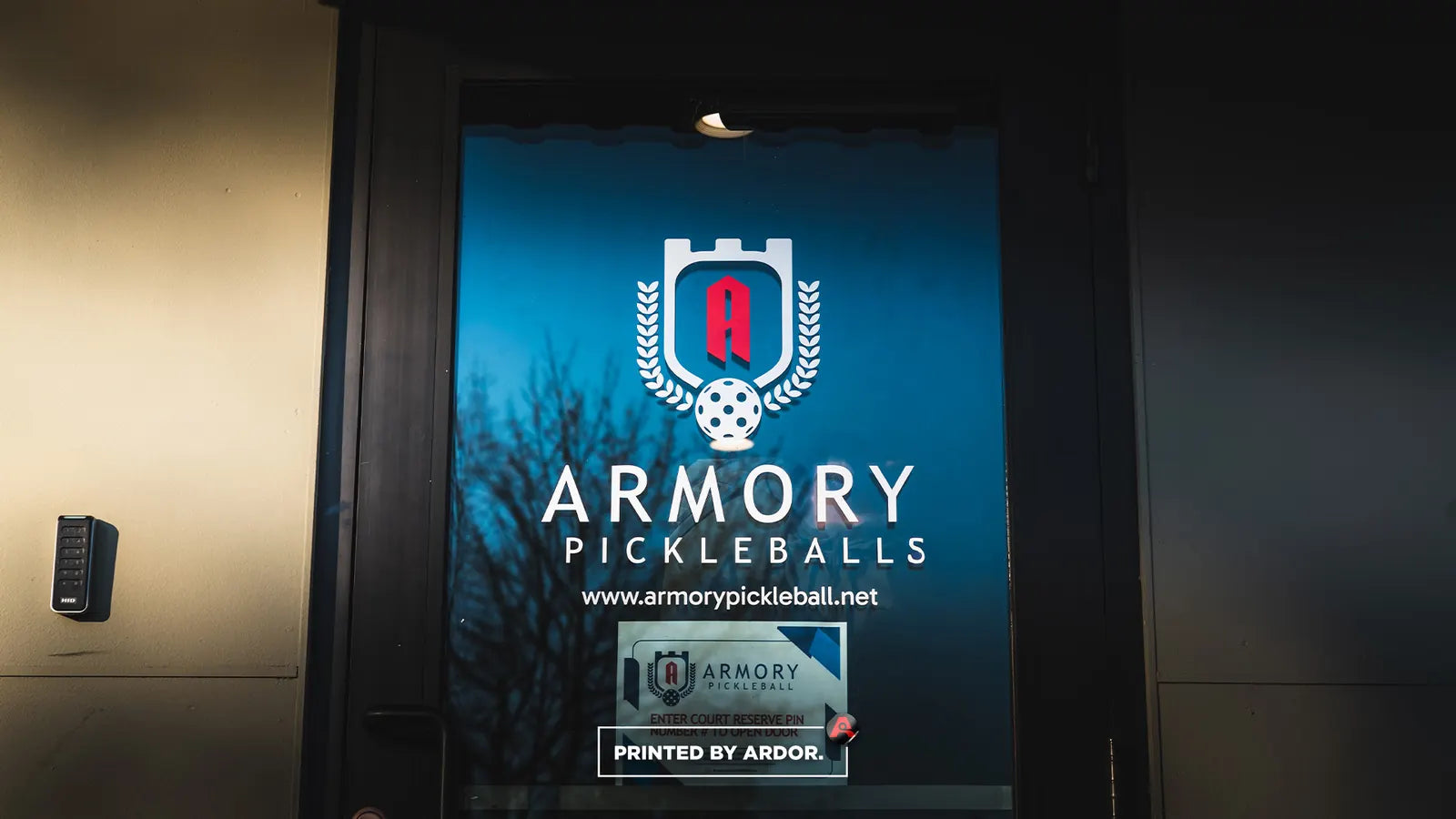
Gyms & Schools Facility Entrance Wall Graphic
A blue wall graphic with the Armory Pickleballs crest and website greets players beside the entrance door.
-
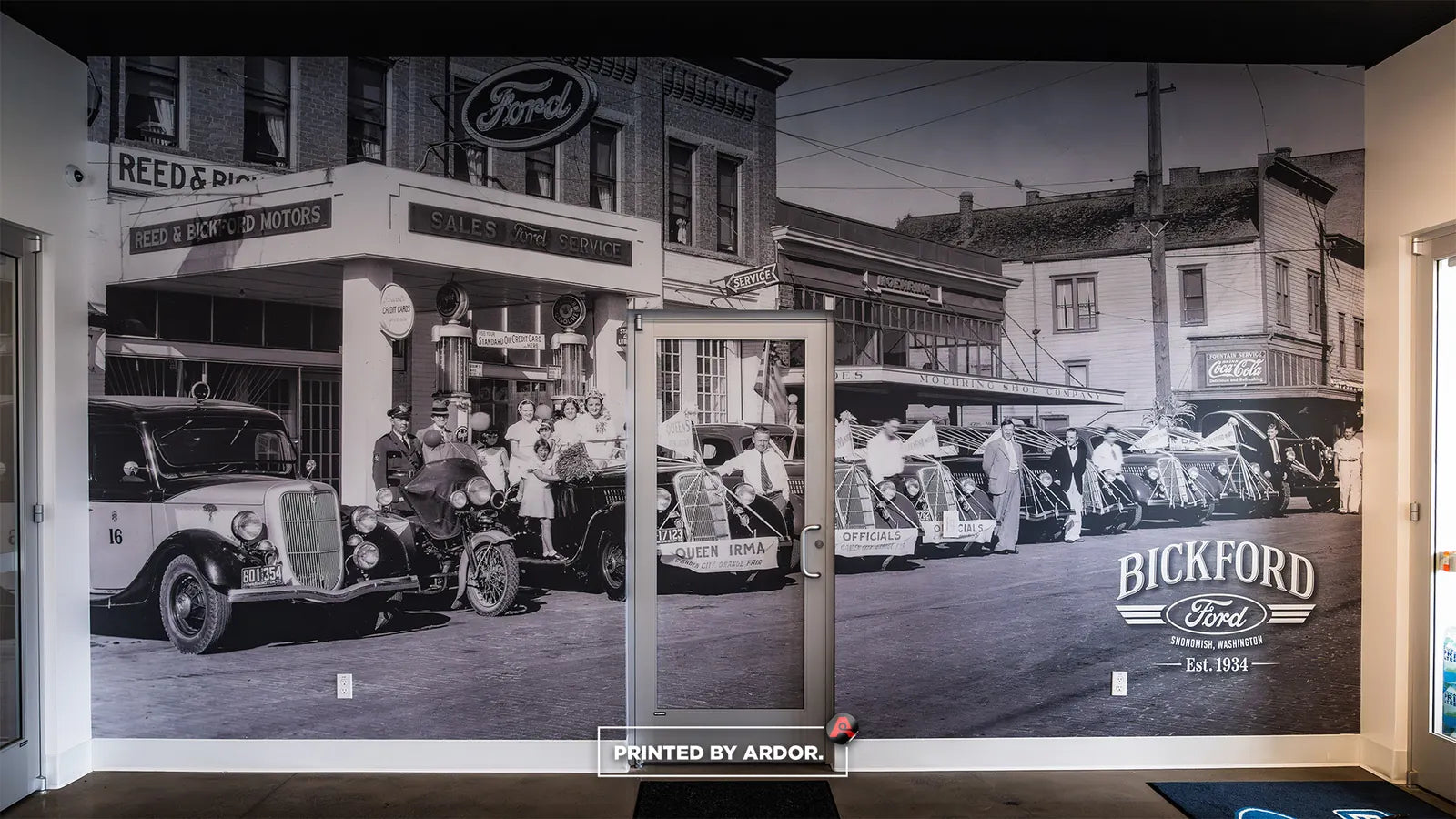
Restaurants & Retail Historic Photo Showroom Mural
A black-and-white historic street photo of vintage Ford cars fills a dealership wall next to the Bickford Ford logo.
-
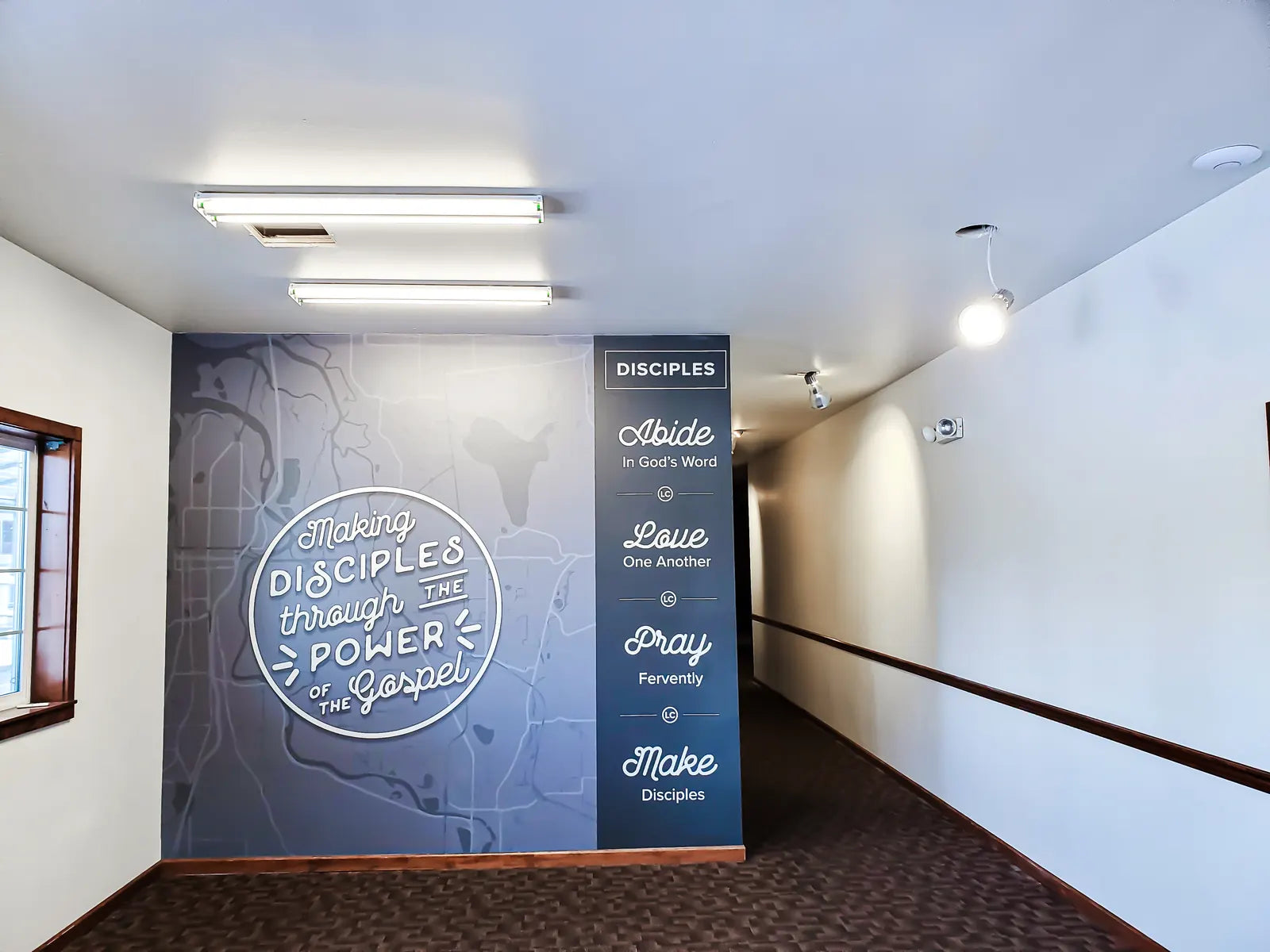
Churches Mission and Values Hallway
The church's mission seal and four values, Abide, Love, Pray and Make Disciples, line the entry hallway.
-
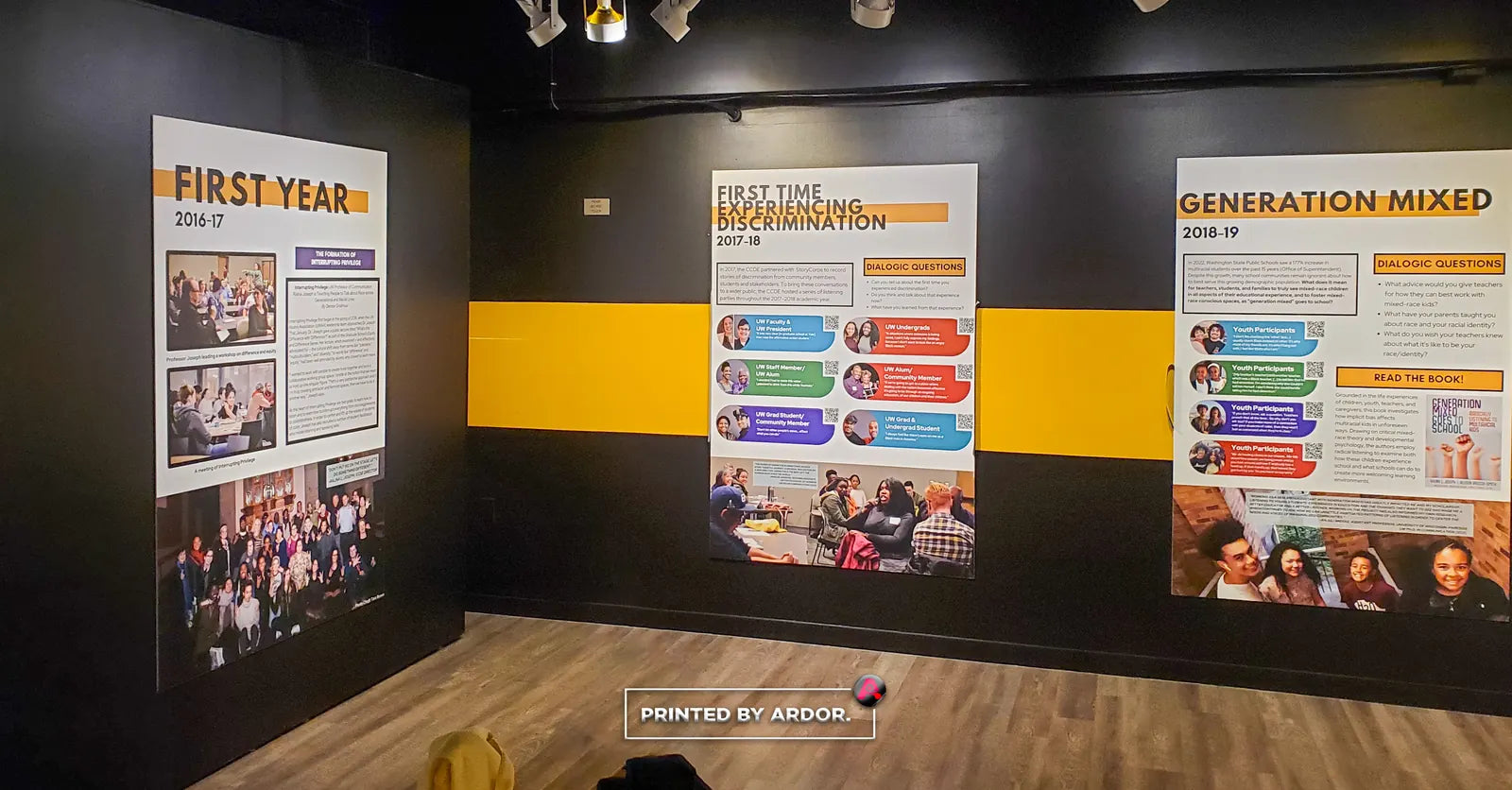
Exhibits & Museums Museum Exhibit Walls and History Panels
Black and yellow wall wraps and large printed history panels titled First Year and Generation Mixed build an exhibit at the Northwest African American Museum.


No projects in this category yet.
FAQ
Frequently asked questions
Can you put vinyl wrap on walls?
Yes, on a sound surface. Smooth, primed, fully cured semi-gloss or gloss paint is ideal. Textured walls, masonry and concrete can take film with the right product and prep. An adhesion test on the wall tells you before you commit.
Can you put a wall wrap on a textured wall?
Light texture, yes, with cast or texture-specific film applied with heat (Avery, 3M). Industry rule of thumb: light orange peel is the practical limit. Heavy knockdown usually needs a skim coat or a different method.
Can you wrap concrete walls?
Yes, with prep. 3M says new concrete must cure 6 to 12 months or be sealed, and sealed or painted concrete should pass a strip test first. For block walls, 3M's IJ8624 is designed for the texture.
Can you put a wall graphic on brick?
Yes. 3M's IJ8624 is designed for brick and goes on with heat and a TSA-4 applicator. Mortar joints deeper than 1/8 inch need 3M's Mosaic Graphic Technique, and dusty brick must be cleaned or sealed first.
How long after painting can I install a wall wrap?
At least 7 days after the final coat, per Avery and Mactac. Latex can take 30 to 90 days to fully cure, so an adhesion test is the better guide.
Why does low-VOC paint matter for wall graphics?
3M says film is less likely to adhere to low-VOC paints. If your walls have one, plan for a test, an alcohol wipe and possibly a higher-tack film.
Can a wall wrap go over wallpaper?
Avery advises against it. 3M allows it only when every seam and edge is well adhered and the adhesion test passes, because the wallpaper can lift with the film later.
Sources
- [1] 3M, Instruction Bulletin: Application, Substrate Selection and Preparation (opens in a new tab)
- [2] SignShop, 3M Issues New Wall Preparation Recommendations (opens in a new tab)
- [3] 3M, Scotchcal IJ8624 Graphic Film for Textured Surfaces (opens in a new tab)
- [4] Avery Dennison, Instructional Bulletin 1.6: Interior Wall Graphics (opens in a new tab)
- [5] Avery Dennison, Instructional Bulletin 6.50: Interior Wall Graphics Tips (opens in a new tab)
- [6] Avery Dennison, MPI 2600 Series Wall Film product data sheet (Rev. 17) (opens in a new tab)
- [7] Mactac, Deco Media Application Guide (opens in a new tab)
- [8] ORAFOL Americas, ORAJET 3628 Wall Art Digital technical data sheet (opens in a new tab)
- [9] Ardor Printing, Wall Wraps and Murals (opens in a new tab)
Free on-site estimates · Ardor Printing
Notsurewhatyourwall cantake?
Book a free on-site estimate. Ardor will check the surface and paint, talk through prep and recommend a film. Call (425) 629-0796, Monday to Friday, 7am to 5pm.